
Before the chargers comes the grid connection
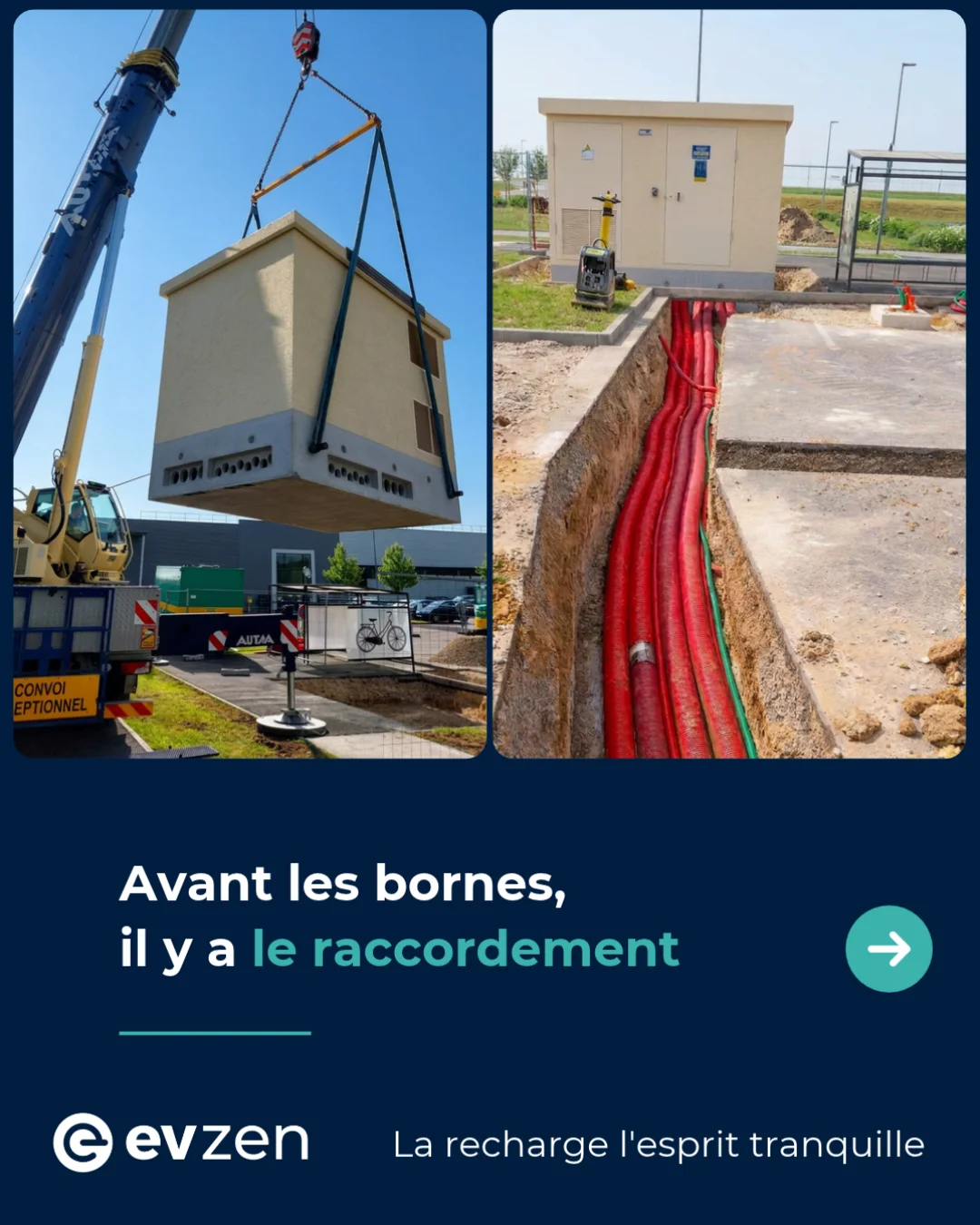
When we picture an ultra-fast charging station, we naturally think of the chargers themselves: their power output, how many there are, where they are located, or even their design.
Yet, long before a driver can plug in, a crucial part of the project is already taking shape behind the scenes: the station’s electrical infrastructure and grid connection.
Installing EV chargers is not simply a matter of selecting the right equipment and connecting it. To deliver the expected charging power, the electrical infrastructure supplying the station must first be carefully assessed and properly sized.
Charging starts long before the charger.
Grid connection: where the project really begins
An ultra-fast charging station requires significant electrical capacity. The more charging points there are, and the higher their power output, the more critical the site’s electrical supply becomes.
From the earliest stages of the project, several factors therefore need to be assessed:
- the characteristics and existing electrical capacity of the site;
- the power required to meet expected charging needs;
- the number and power output of the charging points;
- the layout and constraints of the car park;
- the electrical architecture required;
- as well as future needs and the station’s potential for expansion.
All these factors are interconnected.
This is why the grid connection cannot simply be treated as a separate technical step once the chargers have been selected. The electrical infrastructure and charging infrastructure need to be considered together from the very beginning of the project.
The most powerful charger is not always the right answer
On paper, offering more charging power may seem like the obvious choice. In practice, however, a charging station should be designed first and foremost around how the site will actually be used.
The right level of power will not necessarily be the same for a car park where vehicles remain for several hours as it will for a site serving drivers on longer journeys, who want to quickly add range before getting back on the road.
This means considering expected traffic levels, parking duration, user profiles and the types of vehicles likely to use the station.
The aim is to size the station appropriately, meeting expected demand without unnecessarily oversizing the infrastructure.
In other words, a high-performing charging station is about more than the power rating displayed on its chargers. It depends on the right balance between the site, its users, the charging equipment and the electrical infrastructure behind it.
What lies behind the charger
Most of this groundwork remains invisible to drivers.
Once a station is operational, the charging experience appears simple: arrive, plug in, start charging and get back on the road.
But behind that simple experience are numerous studies and technical decisions made well before the station opens.
Depending on the characteristics of the project, developing a charging station may require adapting the site’s existing electrical infrastructure, designing a new power supply architecture, or carrying out the necessary works to deliver power to the different charging points.
Even the location of the chargers cannot therefore be considered entirely separately from these constraints.
What drivers see in the car park is ultimately just the visible part of the infrastructure.
Designing for tomorrow’s charging needs
Another key consideration is making sure the station is not designed solely around today’s requirements.
The number of electric vehicles on the road continues to grow, while charging habits are evolving too. A location handling only a few charging sessions a day today could see significantly higher demand in the future.
A charging station itself may also need to evolve, with additional charging points, new use cases or different power requirements.
Anticipating these developments during the design phase makes it possible to create an infrastructure that meets both the site’s current needs and its future potential.
This long-term approach is particularly important for car park owners looking to make better use of their sites and provide a genuine charging service, rather than simply installing a few chargers.
For car park owners, the challenge should not be technical
Available power, grid connection, electrical architecture, equipment, civil works, operation...
For a landowner or car park operator, developing an ultra-fast charging station can quickly become a complex undertaking.
But they should not have to become experts in electrical infrastructure or EV charging.
That is precisely where EVzen comes in.
As part of its approach to deploying ultra-fast charging stations in car parks, EVzen assesses the site’s potential and project feasibility, designs the station, finances its deployment, and then manages its installation and operation.
The aim is to approach the project as a whole, taking into account its location, electrical supply, expected usage, sizing and future development from the outset.
For the car park owner, this approach provides an opportunity to make better use of their site by offering a new mobility service, without having to manage the technical complexity involved in developing and operating the charging infrastructure themselves.
A charger is only the visible part of the charging experience
When a new charging station opens, the chargers are naturally what people notice first.
But long before they are installed, the site needs to be assessed, charging needs understood, electrical capacity evaluated and a coherent infrastructure designed around all these factors.
It is this overall approach that turns a car park into a fully-fledged charging site.
Because before deciding where drivers will plug in, you first need to know how the station will be powered.
And that is also what happens behind the scenes of EV charging. ⚡
Key takeaway
An ultra-fast charging station does not start with a charger. It starts with understanding the site, its charging needs and its electrical supply.
