
Top Mistakes to Avoid When Installing EV Charging Stations in a Private Company Parking Lot
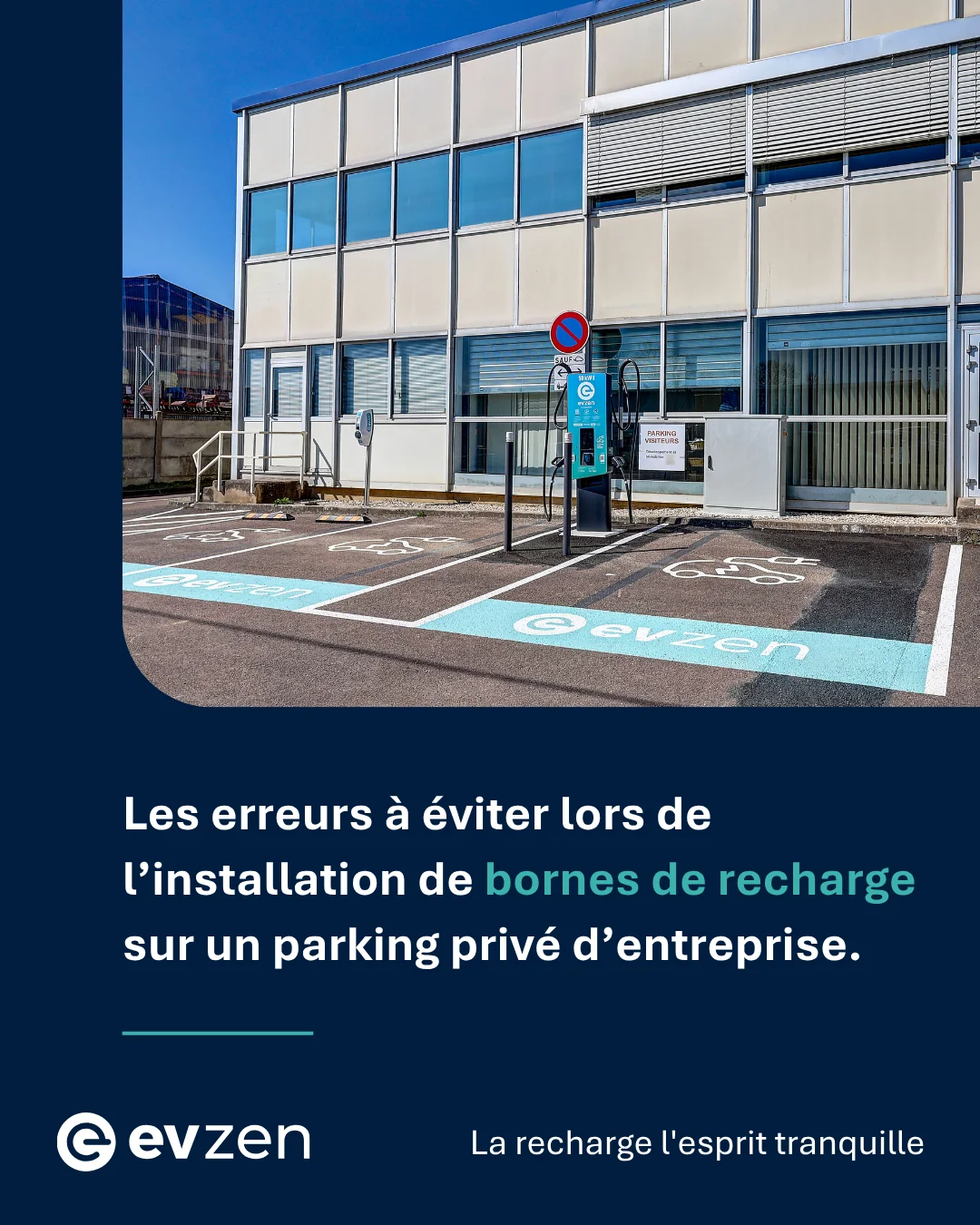
Installing EV charging stations in your company's parking area is a smart investment. However, ensuring a successful project requires more than simply selecting and installing charging equipment. Many charging infrastructure projects fail to deliver their full value, not because of a lack of commitment, but because of poor decisions made during the planning phase.
Here are the most common mistakes businesses should avoid when deploying EV charging stations, along with best practices to ensure long-term success.
Choosing an Installer Instead of a Charging Operator
One of the most common mistakes is entrusting your project to an installer or equipment manufacturer without considering what comes next. The result? Charging stations are installed, but without monitoring, customer support, or ongoing management. Users are left on their own when issues arise.
Best practice: choose a charging operator such as EVzen, which manages the entire lifecycle of the charging infrastructure, from design and installation to maintenance, assistance, and 24/7 monitoring. The goal is not simply to install hardware, but to deliver a complete charging ecosystem tailored to your operational needs.
Undersizing Charging Capacity or the Number of Charging Stations
Another frequent mistake is deploying charging stations that are too slow (for example, 7 kW AC chargers), poorly distributed, or insufficient in number. This can lead to queues, incomplete charging sessions, frustrated users, and ultimately damage to your company's image.
What to plan from the start:
- Charging stations tailored to actual usage patterns (fast DC charging for short stays, AC charging for longer parking durations)
- Infrastructure that can scale over time through additional charging points or increased power capacity
- A logical layout across the parking area, with visible and easily accessible locations
Overlooking Access Management
An open-access charging station can quickly become difficult to manage. Employees may need priority access, visitors may occupy charging spaces for extended periods, and conflicts can arise.
What should be implemented:
- User authentication through badges or mobile applications
- Different access profiles for employees, customers, visitors, and fleets
- A centralized management platform to monitor usage and assign access rights
At EVzen, the EVzen Charge platform enables seamless multi-user management through a simple and intuitive interface.
Neglecting Maintenance and After-Sales Support
Installing a charging station is only the beginning. Ensuring it remains operational is equally important. A faulty charger that is not reported or repaired promptly quickly becomes unusable and creates frustration among users.
Essential elements:
- Preventive and corrective maintenance agreements
- 24/7 technical support
- Real-time monitoring to detect and resolve issues quickly
EVzen provides in-house support services, incident tracking, and rapid on-site intervention when required.
Ignoring Regulatory Requirements
Some organizations launch charging infrastructure projects without verifying legal and regulatory obligations. This can result in delays, additional costs, or even penalties.
Key aspects to review beforehand:
- Compliance with requirements arising from mobility regulations
- Electric vehicle quotas for corporate fleets exceeding 100 vehicles
- Accessibility requirements for people with reduced mobility
- Available local grants, incentives, or subsidies
An experienced charging operator such as EVzen integrates these considerations from the very beginning of the site assessment process.
Failing to Integrate Charging into CSR and HR Strategies
Charging stations are often viewed solely as technical equipment. In reality, they can become a powerful tool for strengthening employer branding, supporting sustainable mobility initiatives, and enhancing employee benefits.
Consider:
- Communicating your environmental commitments
- Offering workplace charging as an employee benefit
- Integrating charging data into CSR and sustainability reporting
Leaving Users Without Guidance
A final common mistake is failing to support users. If employees or visitors do not know how to activate or use a charging station, its value is greatly diminished.
Must-have elements:
- Clear on-site signage
- User guides in digital or printed format
- An intuitive mobile application, such as EVzen Charge, allowing users to locate, start, and monitor charging sessions
Bonus: One Single Card for Workplace and Public Charging
Another common error is multiplying cards, badges, and subscriptions for employees who charge both at work and on the road.
With EVzen, a single charging card provides access to both your company's charging infrastructure and thousands of public charging points across Europe through interoperability agreements. This delivers greater simplicity, visibility, and efficiency for your teams.
In Summary: A Successful Charging Project Starts with Proper Planning
Installing EV charging stations in a private company parking lot involves much more than connecting a charger to the grid. It is simultaneously an infrastructure project, a strategic initiative, a regulatory challenge, and a people-focused transformation.
By anticipating constraints and partnering with a comprehensive charging operator such as EVzen, businesses can gain peace of mind, optimize performance, and build a charging infrastructure that supports long-term growth and sustainable mobility.