
Electric vehicle charging in the company: we are entering a new phase
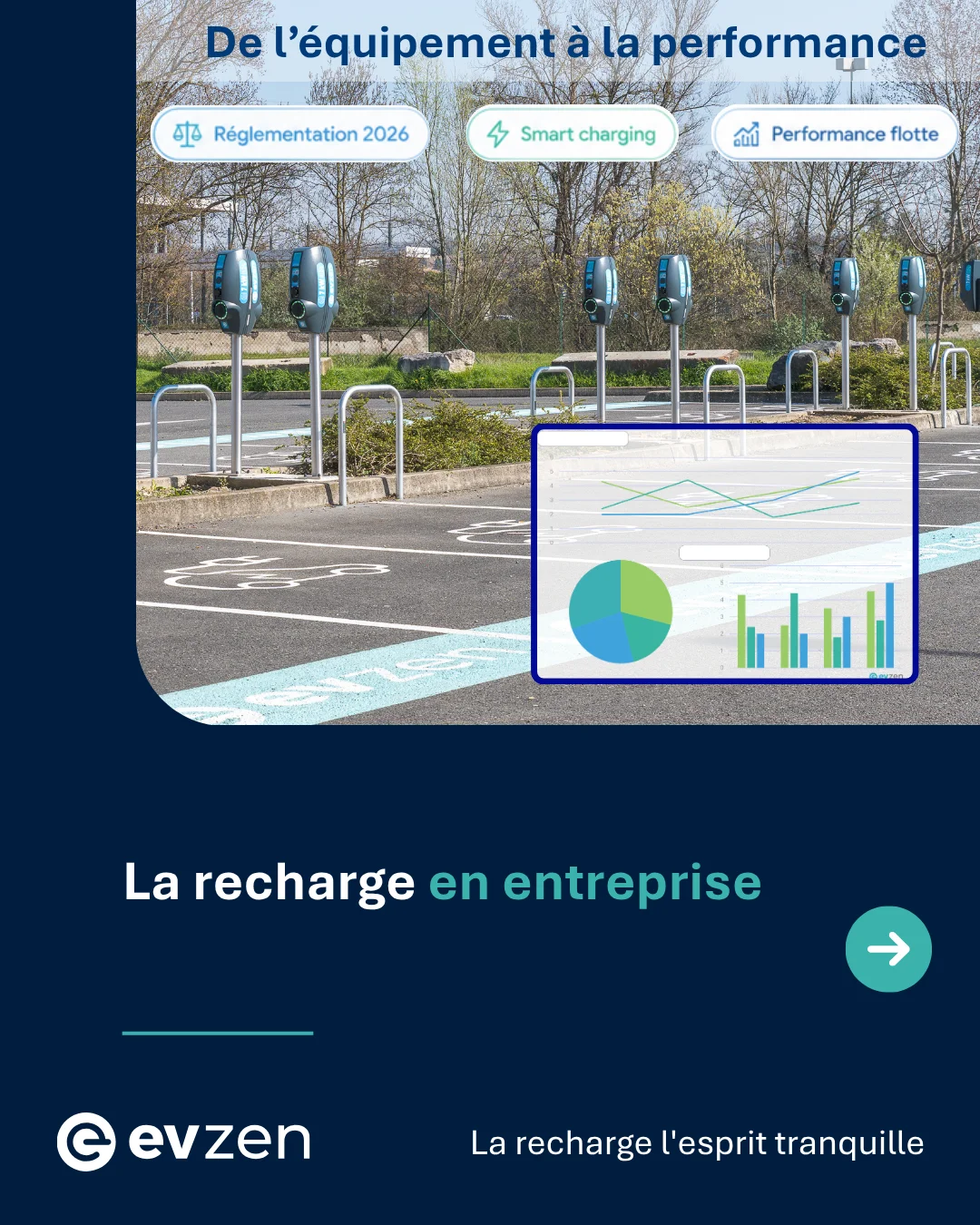
Electric Vehicle Charging Infrastructure: A Strategic Challenge for Businesses in 2026
In 2026, the question is no longer whether companies should electrify their vehicle fleets. The real challenge has become: how can businesses deploy a high-performing, scalable, and cost-effective charging infrastructure to support this transition?
As regulations continue to evolve and electric vehicles become increasingly common within corporate fleets, charging infrastructure is emerging as a strategic driver of competitiveness, cost control, and operational efficiency.
A Regulatory Framework Accelerating Fleet Electrification
Businesses are now facing a rapidly changing regulatory landscape when it comes to sustainable mobility.
Key measures include:
- Requirements to equip certain parking facilities with a minimum number of electric vehicle charging points, in line with mobility regulations.
- Progressive strengthening of tax incentives encouraging fleet electrification.
- Potential penalties of up to €4,000 per non-electrified vehicle for companies that fail to meet regulatory targets.
In this context, anticipating charging needs is no longer solely an environmental issue. It has become a major financial and regulatory consideration.
The EV Charging Market Is Entering a New Era
The electric mobility ecosystem continues to experience significant growth across Europe.
Several indicators highlight this momentum:
- More than one million public charging points have now been deployed across Europe.
- Investments in charging infrastructure continue to accelerate.
- Some companies have already reached fleet electrification rates close to 30%.
This evolution is fundamentally changing the needs of organizations. Installing a few charging stations is no longer enough. Businesses must now view charging infrastructure as a comprehensive energy system.
The Often-Overlooked Challenge: Energy Management and Charging Optimization
One of the most common misconceptions is to see charging stations as simple equipment.
In reality, a successful project depends on the ability to efficiently manage available energy resources and adapt infrastructure to actual user needs.
To ensure the performance of their electric fleets, companies should focus on four key areas.
1. Designing the Right Infrastructure
The objective is not to install as many chargers as possible, but rather to deploy a solution tailored to:
- Real driver usage patterns
- Site-specific constraints
- Available electrical capacity
Proper infrastructure sizing helps optimize investments while ensuring charging availability when needed.
2. Optimizing Energy Management
Smart charging and load balancing solutions are becoming essential to:
- Avoid peak electricity demand
- Control energy costs
- Maximize the use of available electrical capacity
Intelligent charging management can significantly improve the profitability of charging infrastructure.
3. Building a Sustainable Business Model
Every charging project should include a strategic assessment of:
- Total Cost of Ownership (TCO)
- CAPEX and OPEX models
- Potential charger monetization opportunities
- Shared usage between employees, visitors, and partner fleets
The profitability of a charging infrastructure depends just as much on how it is operated as on how it is installed.
4. Delivering a Seamless User Experience
A high-performing charging infrastructure must also be easy to use.
This requires:
- Interoperability with major mobility service providers
- Real-time monitoring and supervision
- Responsive technical support
- Maximum equipment availability
Today, user experience has become a key success factor in the adoption of electric mobility.
The Difference Between an Installed Charger and a Successful Project
Deploying charging stations is relatively straightforward.
Designing an infrastructure capable of supporting the long-term growth of an electric fleet while optimizing energy costs is a much more complex challenge.
This is precisely where the difference lies between a project that is simply installed and one that truly delivers long-term value and performance.
EVzen: A Comprehensive Approach to Charging Infrastructure
At EVzen, we support businesses throughout every stage of their electric mobility journey:
- Strategic consulting and usage-based infrastructure planning
- Technical solutions tailored to each site's electrical constraints
- Smart supervision and charging infrastructure management
- Operations, maintenance, and driver support services
- Optimization of business models, including CAPEX, OPEX, and revenue generation
EV Charging Is More Than Equipment
Our belief is simple: charging is not just equipment, it is a strategic energy service.
The organizations that will successfully transition to electric mobility are those capable of mastering the entire value chain, including energy production and management, charging infrastructure, usage optimization, and user experience.
By adopting a comprehensive approach, businesses can accelerate fleet electrification, reduce operating costs, and transform EV charging into a true driver of sustainable performance.